
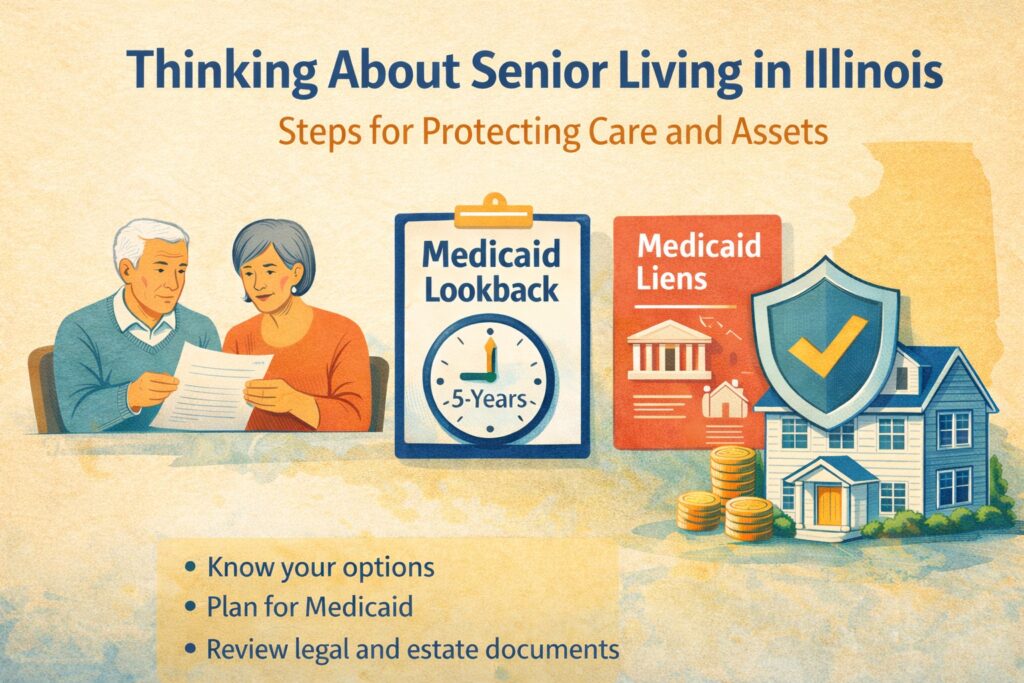
Senior living is a topic many families postpone until a crisis forces quick decisions. Whether the trigger is health, safety, or caregiver burnout, rushed choices often reduce options and increase stress. In Illinois, planning early is especially important because housing decisions can affect Medicaid eligibility, estate recovery exposure, and home-related legal rights.
Approaching senior living as part of a broader elder law plan helps preserve control, improve quality of life, and reduce financial surprises.
Understanding Senior Living Options in Illinois
“Senior living” is not one thing. Each setting has a different care level, cost structure, and legal impact:
-
Independent living for lifestyle and community, typically without hands-on personal care.
-
Assisted living / supportive living for help with activities of daily living and medication support.
-
Memory care for individuals with cognitive decline.
-
Skilled nursing for higher medical needs.
In Illinois, the Supportive Living Program (SLP) is a Medicaid-related option in approved settings. It can cover certain services under waiver authority, while residents still pay room and board.
Cost Planning Before a Crisis
Many families are surprised by what Medicare does not cover in long-term custodial settings. That is why financial planning should begin before urgency narrows choices.
A practical Illinois planning review usually includes:
-
Monthly income and fixed expenses
-
Liquid savings and investment accounts
-
Home equity and whether the home is intended to be retained or sold
-
Likely care trajectory over 3 to 10 years
-
Whether a Medicaid pathway may eventually be needed
Early planning gives you more legal and financial options than last-minute planning.
Illinois Medicaid Lookback: Why Timing Matters
For long-term care Medicaid in Illinois, the state can review transfers made during a 60-month (5-year) lookback period. Transfers for less than fair market value can trigger a penalty period of ineligibility for long-term care benefits.
That means common “family fixes” done late, such as gifting cash or deeding a home interest without proper analysis, can backfire.
Practical takeaway
If Medicaid eligibility may become relevant, do not transfer major assets informally. Coordinate any transfer strategy with counsel first.
Liens, Estate Recovery, and the Family Home in Illinois
Illinois participates in Medicaid estate recovery and may assert recovery claims after death in qualifying cases.
Key points families should understand:
-
Illinois may pursue recovery through estate claims, and historically also used real-property liens in some circumstances.
-
HFS notes that, as of June 2, 2022, Public Act 102-1037 restricts filing of new real-property liens as a collection method in these cases (older liens may still be pursued).
-
Illinois guidance also states no one is forced out in protected-occupant situations (for example, certain spouse/disabled child scenarios), and recovery is not pursued in specific exempt situations.
Home protection is nuanced
A home may be “protected” for eligibility or occupancy in one context, yet still create estate recovery issues later depending on title, probate posture, and claim rules. Illinois also identifies categories it generally does not collect against, such as certain beneficiary-designated assets.
This is why deed strategy, beneficiary designations, and trust/probate alignment matter.
Legal Documents Still Drive Outcomes
Senior living decisions intersect directly with legal planning:
-
Powers of attorney (property and health care)
-
Advance directives
-
Trust and probate design
-
Beneficiary coordination
-
Contract review for entrance or residency agreements
Without updated documents, families often lose time in emergencies and may need more expensive court-based solutions.
A Better Illinois Strategy: Integrate Housing, Benefits, and Estate Planning
The most effective plans treat senior living as one piece of a larger framework:
-
Choose the right care level now, with a path for likely changes.
-
Model costs for private-pay and potential Medicaid phases.
-
Stress-test home decisions (keep, sell, transfer, trust, or TODI/deed alternatives as appropriate).
-
Coordinate legal documents and beneficiary designations before a crisis.
-
Revisit annually as health, finances, and family dynamics evolve.
Thoughtful planning can protect dignity, reduce family conflict, and avoid preventable financial loss.
Key Takeaways
-
Senior living planning in Illinois should start before a crisis.
-
Medicaid long-term care has a 5-year lookback; poorly timed transfers can delay eligibility.
-
Home-related decisions require careful analysis of eligibility, liens/recovery rules, and estate structure.
-
Illinois-specific legal and benefits coordination is essential for protecting both care options and legacy goals, speak to your local Naperville Estate Planning lawyer for more…