
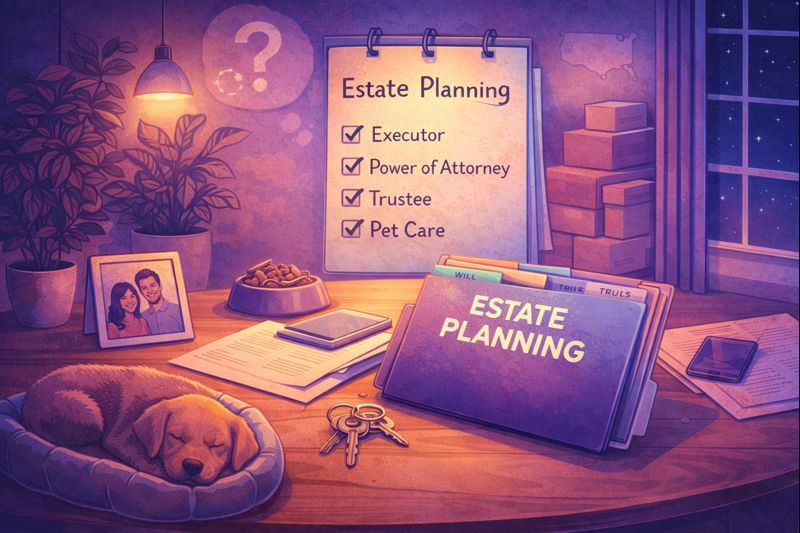
Estate planning is often discussed as if everyone has children, or at least obvious next of kin ready to step in. In reality, many individuals and couples without children face a different set of planning challenges. As a Naperville estate planning attorney, I think this is one of the most overlooked areas in estate planning.
Too many people without children delay planning because they are unsure who to name as beneficiaries, or they assume estate planning matters less if there are no children involved. That is a mistake. In many ways, thoughtful planning can be even more important for people in this position.
Why estate planning matters for couples without children
If you do not have children, you may not have an obvious default choice for who should handle things if you become incapacitated or die. That uncertainty causes many people to put off planning altogether.
However, the need for planning does not disappear just because there are no children in the picture. Someone still needs legal authority to make medical decisions if you cannot. Someone still needs authority to manage finances, pay bills, deal with institutions, and carry out your wishes. Someone still needs to handle your estate after death.
If you have not made those choices in advance, a court process may be required, and the people ultimately involved may not be the people you would have chosen.
Incapacity planning is especially important
One of the most important issues for individuals and couples without children is incapacity planning.
Without a valid financial power of attorney and health care power of attorney, there may be no clear person with authority to step in when needed. If that happens, decisions about your health care or finances may end up being made through a guardianship proceeding or by people who do not really know your wishes.
That is not just inconvenient. It can be expensive, stressful, and deeply inconsistent with what you would have wanted.
A proper estate plan should address not only what happens after death, but also who is in charge if you are alive but unable to act for yourself.
Probate is not easier just because there are no children
Some people assume that having no children means estate administration will be simpler. Sometimes that is true. Often it is not.
Without good planning, an estate may still have to go through probate. That can involve delay, expense, court oversight, and unnecessary stress for the people left to handle matters. It can also create uncertainty about who should receive property if your wishes were never clearly documented.
This is one reason revocable living trusts, coordinated beneficiary designations, and clear estate planning documents can be particularly valuable.
Choosing the right people can be the hardest part
For many couples without children, the biggest obstacle is not deciding whether they need a plan. It is deciding whom to name as beneficiaries and trustees.
You may be considering a sibling, niece, nephew, close friend, or other trusted person. Those can all be reasonable options, depending on the circumstances. The key is to choose people who are trustworthy, responsible, and actually willing to serve.
It is also important to talk with them in advance. Do not assume someone is ready to act as executor, trustee, or agent under a power of attorney just because you are close. These roles carry real responsibility, and the people you name should understand what may be required.
In many cases, backup choices are just as important as primary choices. Life changes. People move. Relationships shift. Someone who seems like the obvious choice today may not be able to serve years from now.
Age and practical ability matter too
When choosing fiduciaries or agents, emotional closeness is not the only factor. Practical realities matter too.
Naming someone close to your own age may work perfectly well, but it can also create problems if both of you face health issues around the same time. For that reason, it is often wise to think through a deeper list of potential decision-makers and to name alternates.
That does not mean younger is always better. It means the choice should be made thoughtfully, with an eye toward whether the person is likely to be available, capable, organized, and steady under pressure.
What if there is no suitable individual?
Sometimes a person or couple simply does not have a friend or relative who is a good fit.
In that situation, a professional fiduciary or trust company may need to be part of the conversation. Depending on the role, that may include a corporate trustee or other professional arrangement. Not every family needs that kind of structure, but for some people it is the best available answer.
This is one of the areas where working with an experienced estate planning attorney can be particularly helpful. A good attorney can help identify realistic options and talk through the pros and cons of naming individuals versus professional decision-makers.
Do not overlook pets
For many individuals and couples without children, pets are among the most important members of the household. Yet pet planning is often overlooked.
If something happens to you, who will care for your pets? Who will pay for that care? If no clear arrangements are in place, pets can be left in a very uncertain position.
A thoughtful estate plan can address both caregiving and financial support for pets, which can bring real peace of mind.
Insurance and aging concerns still matter
People without children sometimes assume that certain planning tools matter less for them. That is not always the case.
Long-term care planning, life insurance, and similar financial protections may still be worth considering, especially where there is a spouse or long-term partner who could be affected by illness, incapacity, or death. Final expenses also need to be considered. Even where there is no inheritance goal centered on children, there may still be a strong need to create stability and financial protection as the couple ages.
Estate planning is not only about leaving money to the next generation. It is also about preserving dignity, maintaining control, and making later years more manageable.
Couples without children deserve a complete estate plan too
People without children sometimes feel as though estate planning is built for someone else. It is not.
A well-designed estate plan can be just as important, and sometimes even more important, for singles and couples without children. The absence of children does not reduce the need for planning. If anything, it makes the need for clear instructions and carefully chosen decision-makers more obvious.
As a Naperville estate planning attorney, I help individuals and couples without children create wills, trusts, powers of attorney, and related planning documents so they can age with more confidence and keep control over what happens to their health, finances, pets, and property. They can enrich their favorite charities, friends, and communities with the right choices.