
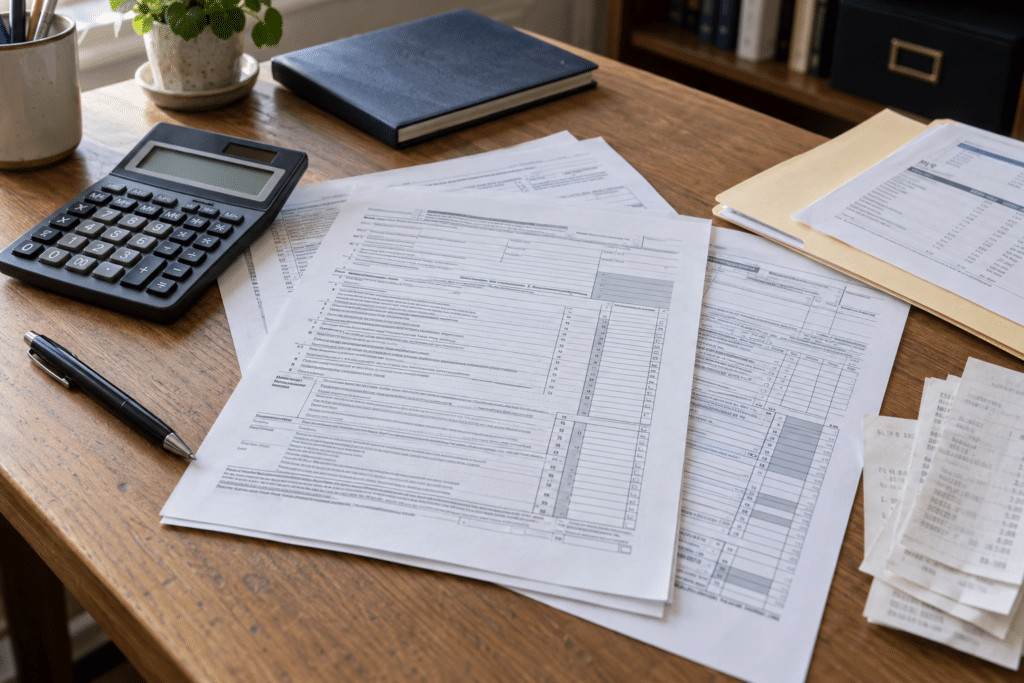
When someone dies, tax paperwork is rarely the family’s first concern. There are people to notify, accounts to locate, and decisions to make, often while everyone is still trying to absorb the loss.
But tax obligations do not necessarily end at death.
A final individual income tax return may be required, and income earned by an estate or trust after death can create separate filing responsibilities. A tax refund may also need to be claimed by someone authorized to receive it.
As a Naperville estate planning lawyer, I encourage clients to think about these practical responsibilities when preparing their plans. Clear documents, organized records, and appropriate professional assistance can make a difficult job more manageable for the people you choose to handle it.
Does a Deceased Person Need a Final Income Tax Return?
A final federal income tax return is generally required if the deceased person met the applicable filing requirements. A return may also be worth filing to recover tax withheld even when filing is not otherwise required.
For most individuals, the final return reports income received from January 1 through the date of death. It may include wages, retirement distributions, interest, dividends, and other reportable income. Unfiled returns from earlier years may also need attention.
Illinois filing requirements must be considered separately. A surviving spouse or representative must file any Illinois return required of the deceased taxpayer.
The important point is that “final” describes the person’s last individual return. It does not necessarily mean the family has completed every tax obligation associated with the death.
Who Is Responsible for Filing?
The person handling the filings may be a court-appointed executor or administrator, a surviving spouse, or another person authorized under the applicable rules. The appropriate signer and supporting documentation depend on the circumstances.
Families should establish who has authority to act rather than assuming that the person named in a will, the person holding a power of attorney, and the person responsible for tax filings are interchangeable.
A qualified tax preparer can help identify the necessary returns and documentation. When probate or trust administration is involved, that work should be coordinated with the attorney handling the administration.
What Happens to a Tax Refund After Death?
A refund does not disappear because the taxpayer has died. However, the proper person must claim and receive it.
Federal Form 1310, Statement of Person Claiming Refund Due a Deceased Taxpayer, may be required. Exceptions include certain surviving spouses filing joint returns and qualifying court-appointed representatives who provide the required documentation. The current instructions should be checked for the particular claim.
Illinois has its own refund documentation, including Form IL-1310 when applicable. Federal and Illinois requirements are not necessarily identical.
A refund attributable to the deceased person generally must be accounted for in administering that person’s affairs. A joint-return refund can raise additional questions about the surviving spouse’s interest.
Keep copies of the returns, refund claims, appointment documents, and correspondence. Do not treat an expected refund as immediately available money for distribution.
The Estate May Need Its Own Income Tax Return
The deceased person’s final return and the estate’s income tax return serve different purposes.
For example, an estate might earn interest while accounts remain open, collect rent from a property, or realize a gain when selling an investment. That activity can create tax obligations after the individual’s final reporting period has ended.
A domestic estate generally must file federal Form 1041 if it has gross income of $600 or more for the tax year. Other filing triggers exist, including having a nonresident alien beneficiary. An estate needing its own return generally obtains an employer identification number, or EIN.
Illinois may also require Form IL-1041. For example, an Illinois resident estate generally must file if it files or is required to file a federal income tax return, regardless of net income or loss.
Not every payment received after death belongs on the estate’s return. Ownership, beneficiary arrangements, and the nature of the payment matter. That is one reason the tax preparer needs more than a folder of year-end tax forms.
Estate Income Tax and Estate Tax Are Different
The names sound similar, but these are separate issues:
- The final individual income tax return addresses the deceased person’s reportable income.
- An estate or trust income tax return addresses income attributable to that estate or trust.
- An estate tax return concerns the transfer of wealth at death and has separate filing rules.
A family can have estate income tax filing duties without owing estate tax.
Conversely, Illinois estate tax deserves its own review when appropriate. Illinois has a $4 million exclusion amount, and a state estate tax return can be required even when no federal estate tax return is required.
Learn more about Illinois estate tax planning.
Does a Living Trust Eliminate These Tax Responsibilities?
Avoiding probate does not eliminate applicable tax obligations.
A properly funded living trust can simplify the transfer and management of assets, but a death may change how the trust reports income. A successor trustee may need to obtain tax advice about a separate return, a new tax identification number, or available reporting elections.
The requirements depend on the trust’s terms, ownership arrangements, and tax status. Trusts and estates have related but distinct filing rules.
Your executor and successor trustee may also be different people. They should coordinate records and professional assistance so important information does not fall between them.
Organize Records Before Your Family Needs Them
One of the most useful things you can leave your family is a clear financial roadmap.
I recommend keeping an accessible record of:
- Your accountant or tax preparer’s contact information.
- Recent federal and state tax returns.
- Bank, investment, and retirement accounts.
- Real estate and business interests.
- Trust documents and information about assets held in the trust.
- Significant gifts and related gift tax returns.
- Where supporting records are stored.
Your chosen decision-makers should know where to find this information and how to obtain authorized access. Sensitive records should be stored securely.
Good organization helps professionals distinguish the deceased person’s income from later estate or trust activity. It also helps the family identify missing information before a filing deadline approaches.
Consider Taxes Before Distributing Assets
It is understandable for an executor or trustee to want to finish the work and distribute the inheritance promptly. But an account balance is not necessarily the amount available for beneficiaries.
Before making final distributions, the person administering the estate or trust should work with the appropriate professionals to identify outstanding returns, taxes, expenses, and any reserve that should be retained.
Selling property, making distributions, and choosing when to complete transactions can affect the tax reporting. Those decisions should be considered together.
Make the Job Easier for the People You Choose
Estate planning includes deciding who inherits. It also includes preparing the people who will carry out your instructions.
In my Naperville estate planning practice, I help clients create coordinated wills, trusts, powers of attorney, and related documents. I also explain the practical steps needed to put the plan into effect, including organizing information for future decision-makers.
If your documents are outdated, your assets have changed, or your family would struggle to locate your financial information, this is a useful time to review your plan.
I work directly with clients in Naperville and the surrounding Chicago suburbs, with daytime and evening appointments and the option to meet at your home.
Book a complimentary 20-minute call to discuss your estate plan.